
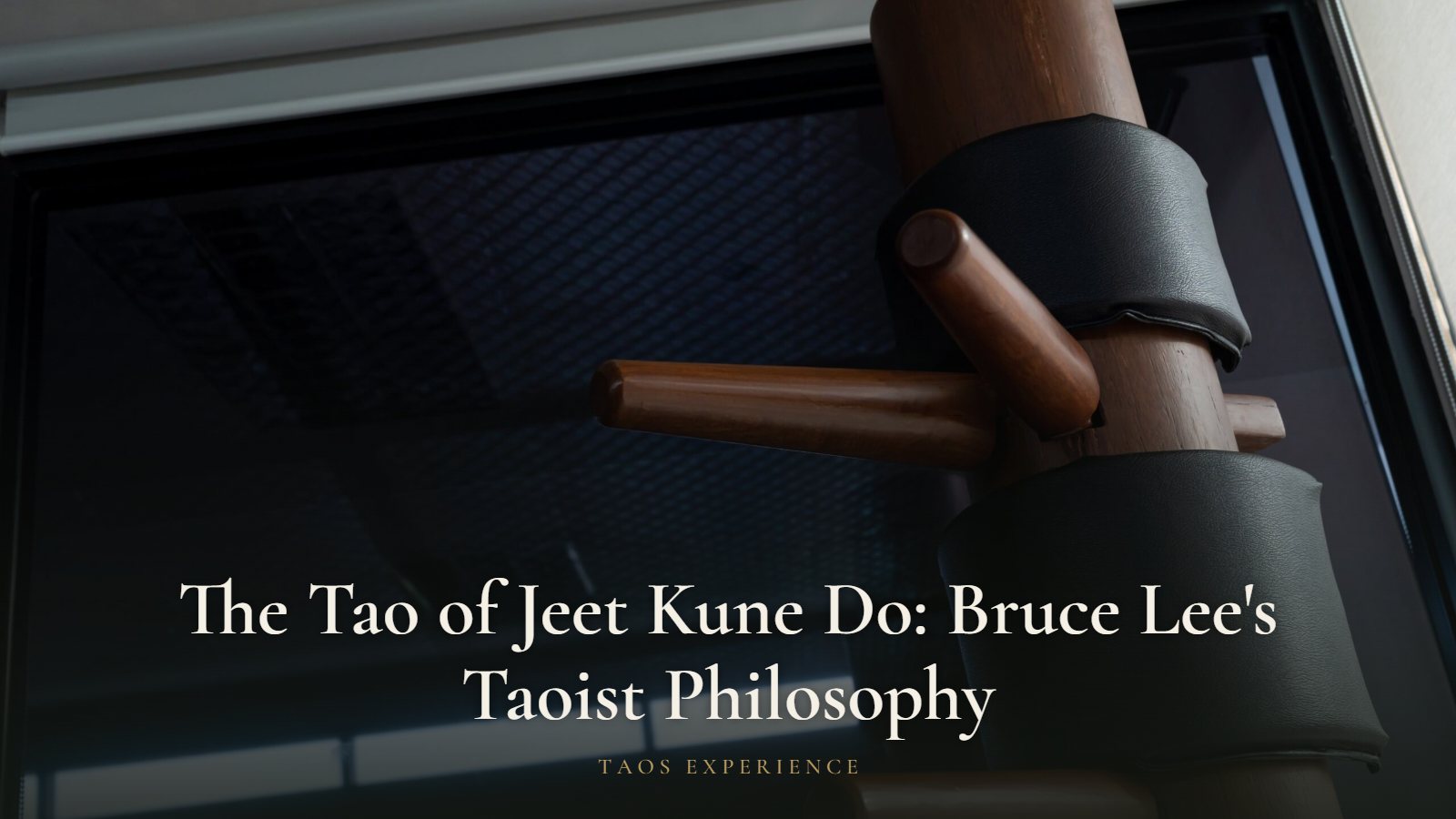
Bruce Lee is remembered as a film star and fighter, but he also studied philosophy at the University of Washington and read widely in Taoism and Zen. Jeet Kune Do, the martial art he developed in the late 1960s, is as much a way of thinking as a fighting system. The name means “the way of the intercepting fist”, and the word “do” is the Japanese and Cantonese reading of Tao, the Way.
This article looks at the Taoist ideas behind Jeet Kune Do and how you can use them, whether or not you ever throw a punch. For the wider background, see our overview of Tao-influenced martial arts and our page on Jeet Kune Do.
What is the book “Tao of Jeet Kune Do”?
The book most people know was not finished by Lee. He died in 1973, and Tao of Jeet Kune Do was published in 1975 by Ohara Publications, compiled from his notes and sketches by Gilbert Johnson with help from his widow Linda Lee and his student Dan Inosanto. It reads like a notebook: short passages on footwork, timing and attitude mixed with philosophy. Lee drew on many sources, including the Tao Te Ching, Zen writing, Jiddu Krishnamurti and Western fencing and boxing manuals.
Because it is a collection of notes, it is best read slowly, a page at a time, rather than as a step-by-step course.
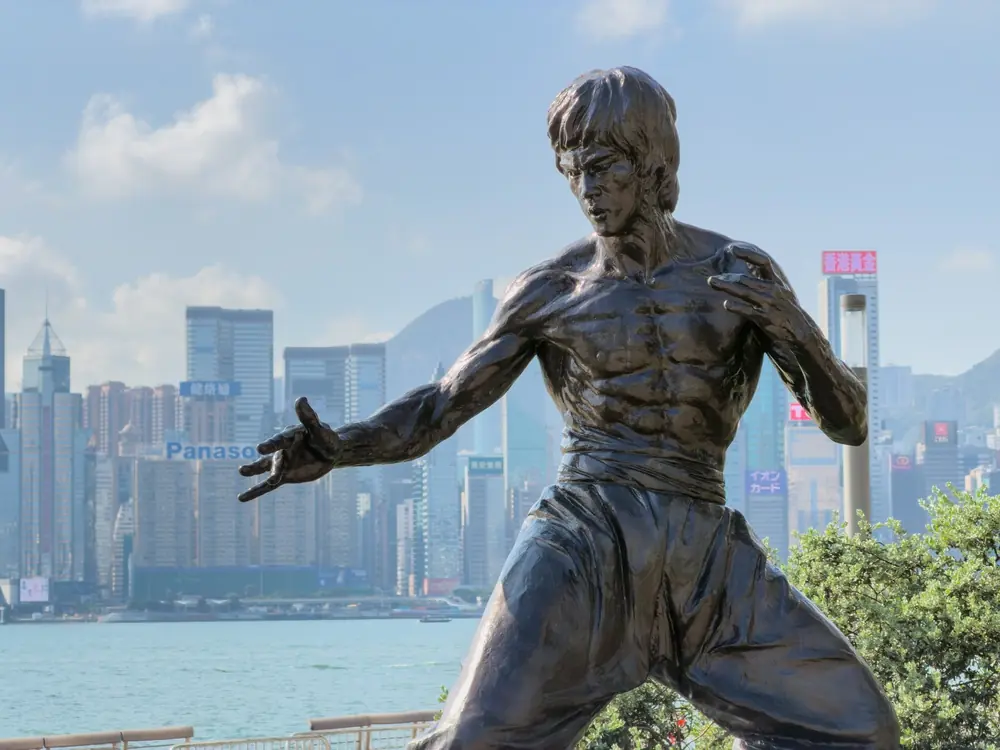
Be like water
Lee’s best-known saying is his advice to “be water”. It comes straight from the Tao Te Ching, which describes water as the softest thing in the world, yet able to wear down the hardest. Water does not fight its container; it takes its shape, flows around obstacles and still gets where it is going.
In Jeet Kune Do this means not locking yourself into fixed stances or set patterns. You adapt to the opponent in front of you. Outside training, it is a reminder to respond to what is actually happening instead of forcing a plan onto a situation.
Emptiness and “no way as way”
Lee often used the image of an empty cup: a cup is only useful because it is empty. In the same way, a mind already full of opinions and techniques cannot take in anything new. The Tao Te Ching makes a similar point about the empty space inside a wheel, a pot and a room being what makes them useful.
His motto “using no way as way, having no limitation as limitation” follows from this. He wanted students to absorb what was useful, reject what was useless and add what was specifically their own, rather than become loyal to a single style.

Wu wei: effortless action
Wu wei is often translated as “non-action”, but it really means action without strain or forcing. A skilled fighter does not tense up and push; they move at the right moment with the least wasted effort. Lee called this kind of spontaneous, trained response “artless art”. Our article on wu wei in modern life shows how the same idea applies to work and relationships.
Yin and yang in combat
Lee used the yin-yang symbol as the emblem of his school, with arrows added to show that the two forces are always moving into each other. In practice this means softness and hardness working together: yielding to an attack and countering in the same motion, or relaxing between strikes so the next one is faster. Neither side is better; each needs the other. See Yin and Yang Explained for more on the principle itself.
Simplicity: hacking away the unessential
Lee believed progress comes less from adding techniques than from removing what is not needed. The most direct line, the shortest movement and the simplest answer usually work best. This echoes the Taoist idea of returning to the “uncarved block”, a natural state before it is covered by habit and complication.
Applying the philosophy in daily life
- Adapt rather than resist. When plans change, ask how to flow around the obstacle rather than push against it.
- Empty your cup. Approach new people and ideas without deciding in advance what they are.
- Simplify. Look for one thing you can stop doing this week that adds nothing.
- Stay relaxed under pressure. Tension slows you down, in sparring and in difficult conversations.
- Make it your own. Take what works from any teaching and leave the rest.
Frequently Asked Questions
Was Bruce Lee a Taoist?
He did not follow Taoism as a religion, but he studied Taoist philosophy closely and used its ideas, especially from the Tao Te Ching, as the foundation of Jeet Kune Do.
Did Bruce Lee write the Tao of Jeet Kune Do?
The content is his, taken from his notes and drawings, but he did not finish the book. It was compiled after his death and published in 1975.
What does “be like water” mean?
It means staying flexible and adapting to circumstances, the way water takes the shape of whatever holds it while still having great strength.
Is Jeet Kune Do still taught today?
Yes. It is taught by schools around the world, many tracing their teaching back to Lee’s students such as Dan Inosanto.
Leave a Reply