
Tai chi is often described as “meditation in motion”, and for most people it is a gentle way to improve balance and calm the mind. Behind the slow movements, though, is a complete philosophy drawn from Taoism. Understanding it changes how you practise: the forms stop being a sequence to memorise and become a way of exploring how softness, balance and timing work.
If you are new to the art itself, start with our introduction to Tai Chi Chuan.
The name: taiji, the supreme ultimate
Tai chi is short for taijiquan. “Taiji” means “supreme ultimate”, a Taoist and Neo-Confucian term for the principle from which yin and yang arise. “Quan” means fist, or boxing. So the name itself says this is a martial art based on the interplay of yin and yang.
The classic texts of tai chi, traditionally linked to the legendary Taoist Zhang Sanfeng and to the later writer Wang Zongyue, open with this idea: taiji is born from wuji, the state of undivided stillness, and is the mother of yin and yang. Every tai chi form begins and ends in a still standing posture for this reason. You start in wuji, move into the play of opposites and return to stillness.
Yin and yang in every movement
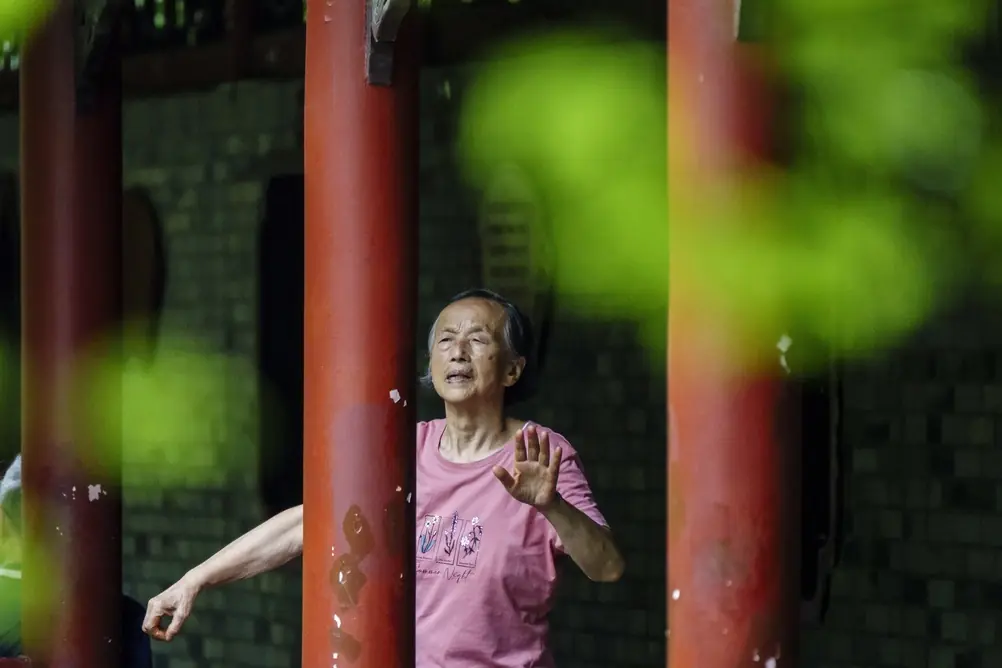
In tai chi, yin and yang are not abstract. They are the weight shifting from one leg (full, yang) to the other (empty, yin), the hands rising and sinking, the body opening and closing, breathing in and breathing out. Good practice keeps these changes smooth and continuous, with no sudden jumps. Our article Yin and Yang Explained covers the principle in more depth.
Softness overcomes hardness
The Tao Te Ching says that the soft and weak overcome the hard and strong, and that what is rigid breaks while what is supple survives. Tai chi takes this literally. Instead of meeting force with force, you yield, redirect and use the other person’s momentum. The classics describe using “four ounces to move a thousand pounds”.
This is why teachers keep telling you to relax. Tension blocks movement and makes you easy to push over. Relaxed does not mean floppy, though. It means using only the effort you need.
Rooting and the dantian
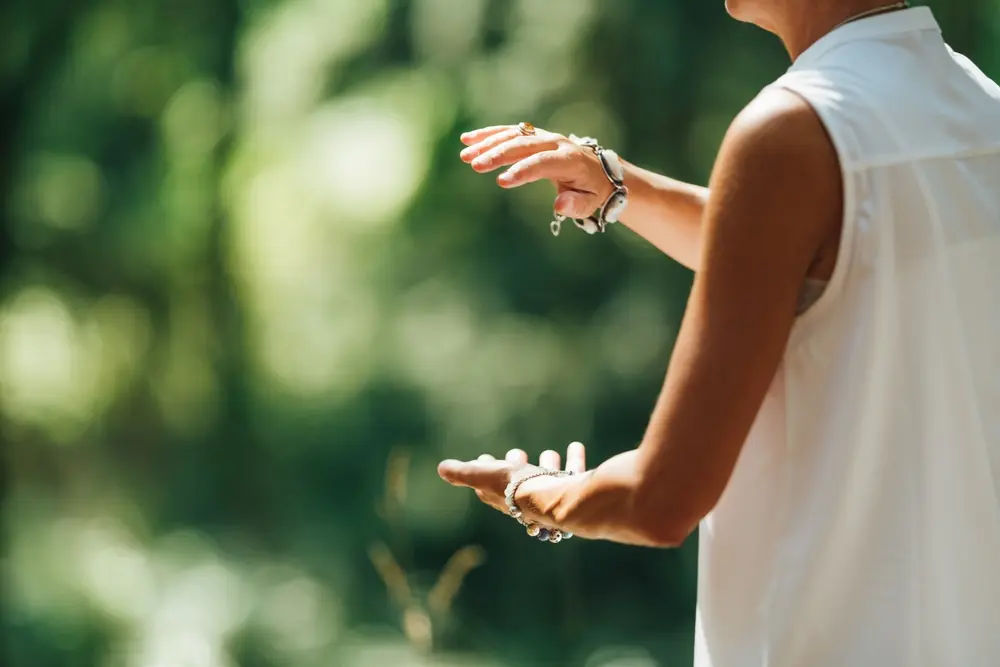
Effortless power depends on a strong root. Tai chi students learn to sink their weight into the feet and keep their centre in the lower belly, the area Taoists call the dantian. Movement starts from the legs and waist, not the arms. When the body moves as one connected unit from a stable root, small movements carry surprising force.
Qi and intention
Traditional teaching says the mind leads the qi and the qi moves the body. In practical terms, you place your attention where the movement is going, and the body follows with less effort. Whether you think of qi as energy, circulation or focused awareness, practising this way makes tai chi calmer and more precise. See Qi and Emotional Health for how Taoists link qi to wellbeing.
Wu wei: action without forcing
All of these principles meet in wu wei, effortless action. In tai chi, it is the moment the form stops feeling like something you are doing and starts to move by itself. It takes years, but you can feel glimpses of it early, usually when you stop trying so hard. Read more in Wu Wei in Modern Life.
Taking the philosophy off the mat
- Notice when you are meeting pressure with more pressure, and try yielding first.
- Keep a “root” in stressful moments by feeling your feet and breathing into your belly.
- Look for balance in your week between active (yang) and restful (yin) time.
- Begin and end busy days with a minute of stillness, as tai chi forms do.
Frequently Asked Questions
Is tai chi a Taoist practice?
Tai chi is a martial art rather than a religious practice, but its core ideas of yin and yang, wuji, softness and wu wei come directly from Taoist philosophy.
What does wuji mean in tai chi?
Wuji is the state of undivided stillness before movement begins. Forms start and finish in a quiet standing posture that represents it.
Do I need to understand the philosophy to benefit from tai chi?
No. The physical benefits for balance and relaxation come from practice alone. The philosophy simply helps you understand why the movements are done the way they are.
How is tai chi different from qigong?
Tai chi is a martial art with set forms and applications, while qigong is a broader family of exercises focused mainly on breath and energy. They share many principles. Our guide to Taoist qigong for beginners explains more.
Leave a Reply