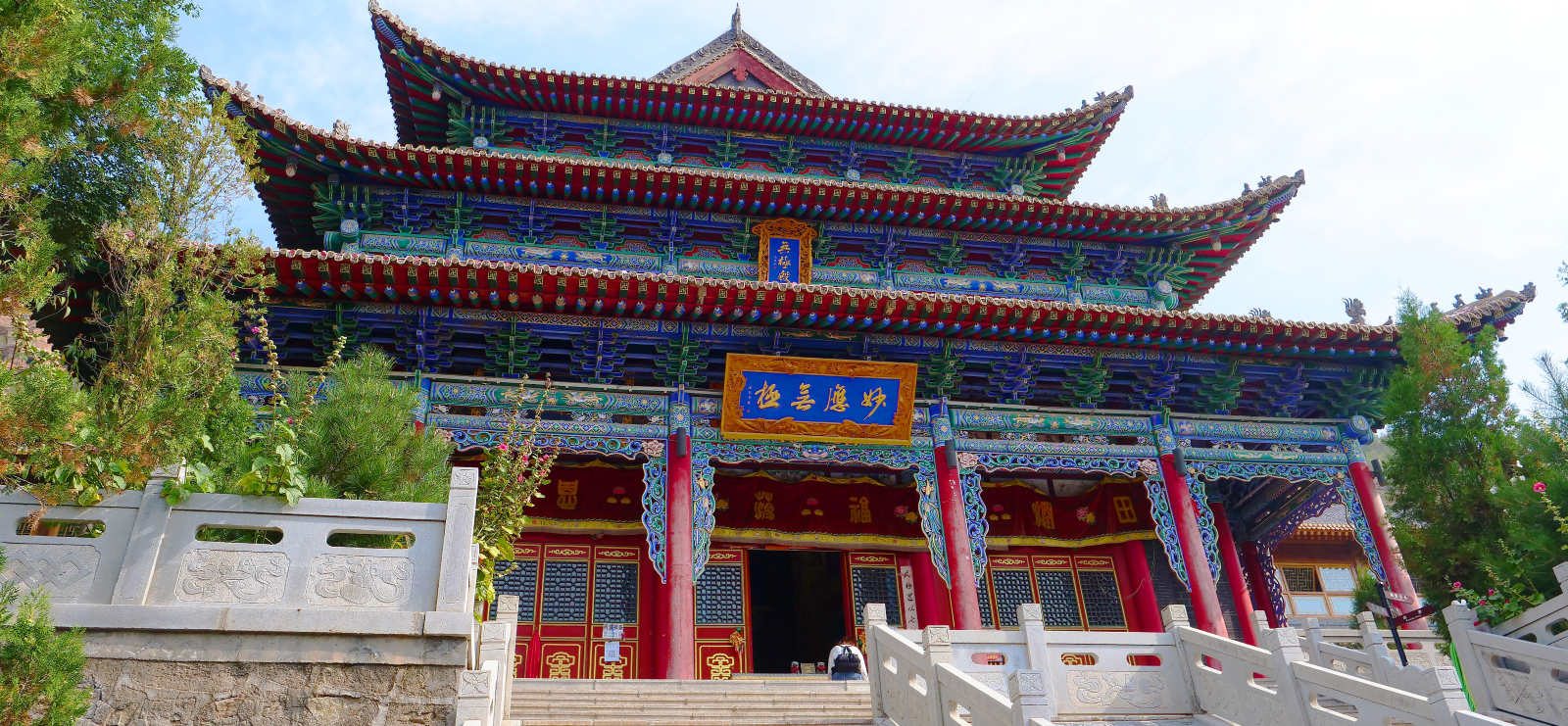

Tao which is actually pronounced as “dow” is translated to mean the way or path in English. Tao in reality is not so easily definable. The Tao is the power of the universe that encompasses and moves through all things, both living and non-living. The Tao stands for balance and shows the harmony of opposite sides, such as light and dark, love and hate, male and female.
What is Taoism?
More a philosophy than a religion, Taoism is concerned with finding a balance between the way we live our lives and the demands life places on us. Translated literally as ‘The Way’, following the Tao means practising a form of ‘minimal’ action called the ‘wu wei’. This is described in Taoism as the practice of going against the stream not by struggling against it and thrashing about. By standing still and letting the stream do all the work. Thus the sage knows that relative to the river, he still moves against the current.
To the outside world the sage appears to take no action, but in fact he takes action long before others ever foresee the need for action. In other words, Taoism is a form of passive resistance, of making sure you are prepared for every eventuality and going with the flow as things happen.
Tao is the first-cause of the universe. It is a force that flows through all life.
“The Tao surrounds everyone and therefore everyone must listen to find enlightenment.”
Each believer’s goal is to harmonise themselves with the Tao. Taoism has provided an alternative to the Confucian tradition in China. The two traditions have coexisted in the country, region, and generally within the same individual. Priesthood views their many gods as manifestations of the one Dao, “which could not be represented as an image or a particular thing.” The concept of a personified deity is foreign to them, as is the concept of the creation of the universe. Thus, they do not pray as Christians do; there is no God to hear the prayers or to act upon them. They seek answers to life’s problems through inner meditation and outer observation. Read more at the taosexperience blog.
Some of the basic tenets of Taoism are the following:
- Time is cyclical, not linear as in Western thinking.
- Taoists strongly promote health and vitality.
- Five main organs and orifices of the body correspond to the five parts of the sky: water, fire, wood, metal and earth.
- Each person must nurture the Ch’i (air, breath) that has been given to them.
- Development of virtue is one’s chief task. The Three Jewels to be sought are compassion, moderation and humility.
- Taoists follow the art of “wu wei,” which is to let nature take its course. For example, one should allow a river to flow towards the sea unimpeded; do not erect a dam which would interfere with its natural flow.
- One should plan in advance and consider carefully each action before making it.
Understanding Taoism’s Timeless Wisdom
The Natural Flow of Compassion
At its heart, Taoism embraces the natural compassion within us all. A Taoist extends kindness to others not with expectation of reward, but from a deep understanding that compassion flows naturally when we align with our true nature. This reciprocity isn’t calculated, but emerges organically from living in harmony with the Tao.
“People are compassionate by nature,” teaches Taoism. “Left to their own devices, they will show this compassion without expecting anything in return.” This perspective sees kindness not as a learned behaviour but as our default state when artificial constraints are removed.
Wisdom That Nourishes
This wisdom echoes in the famous teaching often attributed to Lao Tzu: “If you give a hungry man a fish, you nourish him for a day. If you teach him to fish, you nourish him for life.” The principle reveals how sustainable compassion creates lasting change rather than temporary relief – a deep insight into how true kindness looks beyond immediate solutions.
A Universal Philosophy
Today, Taoism transcends boundaries of language and culture, practised across the globe by those seeking harmony with the natural world. Its universal appeal lies in its simplicity and deep insights into human existence. Regardless of nationality or background, practitioners find common ground in its teachings about alignment with nature’s rhythms.
The Enlightened Master’s Final Lesson
Consider the story of the enlightened Taoist master. After decades of inner work, he achieved ultimate understanding of the Tao’s true nature. As he lay dying, disciples gathered around his bed, eager for his final wisdom. “Master, what is the true Tao?” they asked. The old man opened his eyes, smiled gently and replied, “The true… is true,” before peacefully passing away. His deceptively simple answer embodied the essence of Taoist wisdom – truth exists beyond elaborate explanations.
The Way of Wu Wei
Alongside Confucianism and Buddhism, Taoism stands as one of ancient China’s most influential philosophical traditions. Its essential principle of “Wu Wei” (often mistranslated as “No-Do”) represents not passivity but rather natural action – moving through life without forcing or interfering with the natural flow of events. This concept encourages us to act in accordance with our authentic nature rather than struggling against the current.
Finding Harmony in Simplicity
Taoism invites us to find our unique way within the greater whole, seeking harmony between people and with the universe itself. It encourages simplicity over complexity, suggesting that scientific progress and material accumulation often separate us from our essential nature. For Taoists, the person who drinks water from cupped hands may be closer to wisdom than one who requires manufactured vessels.
Returning to Authenticity
The true Taoist understands that sometimes the most deep wisdom lies not in adding to our lives, but in returning to our most authentic, natural state of being. This return doesn’t reject the modern world entirely, but rather maintains a conscious relationship with it – recognising when technology and material pursuits help or hinder our connection to the Tao. Through this discernment, we discover that the path to enlightenment often involves shedding accumulated layers rather than acquiring new knowledge.
Finding Harmony with Nature
The Ultimate Purpose
The goal of Taoism is to conform to the ways of nature and achieve fusion with the Whole. Taoists believe that strict rules of discipline, whether personal or governmental, are artificial constructs that distort human nature and separate us from the natural balance of yin and yang. These imposed structures create barriers between ourselves and our authentic connection to the universe.
The Ineffable Tao
In the deep work of Lao Tzu, Taoists discovered this essential truth: “The Tao that can be known is not the eternal Tao. The substance of the World is just a name for Tao. Tao is all that exists and may exist. The universe is only a map of what exists and can exist.” This reminds us that true understanding lies beyond intellectual comprehension.
Dual Experience
The experience of Tao involves transcending ego to sense the universe directly and gaining wisdom to understand it. These two types of experience form the path within Taoism. They manifest differently in each person, yet neither experience fully conveys the Tao itself, which remains infinitely greater and more subtle than the World we perceive.
Core Virtues of the Sage
Being Honest Prevents Deception. Not Putting A Value on Things Prevents Loss. Not Flaunting Beauty Prevents Lust.
So the sage governs people by: Emptying their hearts, filling their bellies. Weakening their ambition and strengthening their bodies. When people lack excessive knowledge and desire, even the most skilled manipulator cannot control them. By avoiding unnecessary action, all can live peacefully together.
The Boundless Nature
We must remember that Tao is a depthless vessel. Used by itself, it is never filled. The universe cannot be cut, knotted, dimmed, or stilled. Its depths remain hidden, ubiquitous, and eternal – we know not from whence it came, as it existed before Nature itself.
Embracing the Way
Embracing the Tao, you will be embraced in return. Easily, smoothly, you will be reborn. Clarify your vision, and you will be enlightened. Feed your compassion, and you will become impartial. Open your heart, and you will be accepted. By accepting the universe, you embrace Tao – sustaining and nurturing, creating but not owning, giving without demanding, guiding without controlling.
This is the virtue.
Formless Power
The Tao has no form or spirit and cannot be seen or heard, yet its application is inexhaustible. While offering music and food might attract strangers temporarily, aligning with the Tao will bring the people of the universe to keep you in safety, health, companionship, and peace.
Paradoxical Wisdom
He who seeks knowledge acquires as much as possible every day. He who follows the Tao loses as much as possible each day. By reaching a state of non-action, doing nothing, nothing remains undone.
Nature as Teacher
In the end, say the Taoists, the fundamental virtues are peace, repose, and silence. Their model is nature, which serves as an excellent example for humanity, since nature does not prolong storms or hurricanes indefinitely. The essential principle of Wu-Wei (Non-Doing) doesn’t advocate passivity but rather avoiding unnatural acts. It suggests spontaneity – allowing things to take their natural course, flowing without forcing actions or interfering with natural development.
Everything that happens is part of the Tao, and every human being should seek their way within it. Taoism yearns for harmony between people and between humanity and the All – a state of perfect balance with the universe itself.